Texts & cultural history · Philosophy
Athanasius
Early Christian churchman and letter writer
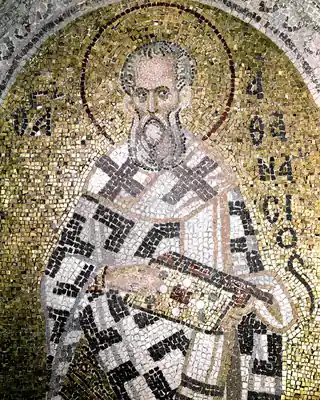
Later depiction · Image credit
Who they are
Athanasius’s Thirty-Ninth Festal Letter set out categories of religious writing for his readers in 367. It listed scriptural books, named other works suitable for instruction and rejected writings he considered apocryphal. The letter is included as a primary record of canon formation, rather than an explanation of every later manuscript’s survival or disappearance.
His letter contributes to the timeline’s history of how communities define authoritative knowledge and preserve texts.
Selected contributions
- Distinguished canonical, instructional and rejected writings in the 367 Festal Letter.Source ↗
Selected works
Correspondence · 367
From Athanasius’s Thirty-Ninth Festal Letter
These translated excerpts list scriptural books and distinguish them from other religious reading. They document Athanasius’s classification of writings, without establishing why the Nag Hammadi manuscripts were later buried.
Letter composed in 367; linked English excerpts derive from the 1892 Nicene and Post-Nicene Fathers edition.
Reading scope & citation
Reused prior inspected evidence: Supporting passages inspected; not a cover-to-cover audit of every linked publication
In the timeline
Biography sources & portrait credit
- From Athanasius’s Thirty-Ninth Festal Letter ↗New Advent / Nicene and Post-Nicene Fathers
Portrait credit
Byzantine mosaic artist uncredited; photograph by Byzantine Institute staff. CC0. Via Wikimedia Commons.
Later depiction. Cropped to 4:5, resized to 320 × 400 and converted to WebP.
