Science
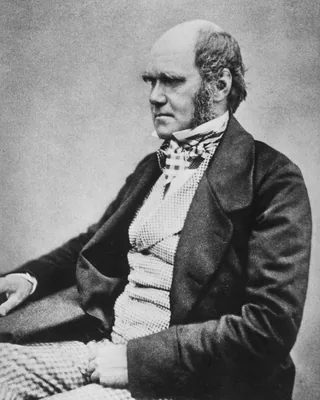
Charles Darwin
Naturalist and evolutionary theorist
Also known as Charles Robert Darwin
Photograph · Image credit
Who they are
Charles Darwin developed an explanation of species change through natural selection, represented in the timeline by his contribution to the 1858 Linnean Society communication. That publication brought extracts from his earlier writing together with Alfred Russel Wallace’s independent essay. The original record helps distinguish shared intellectual ground from separate authorship and publication arrangements.
Darwin’s selection argument contributes a natural mechanism to the timeline’s account of biological and human origins.
Selected contributions
- Supplied earlier manuscript and letter extracts describing his selection argument for the 1858 communication.Source ↗
Selected works
Academic paper · 1858 · Historical society communication
On the Tendency of Species to form Varieties; and on the Perpetuation of Varieties and Species by Natural Means of Selection
The joint communication presents Darwin’s earlier extracts and Wallace’s independent essay on how natural selection can preserve variation. Lyell and Hooker’s covering letter explains how the separate contributions were brought together.
Reading scope & citation
Prior relevant primary sections and edition metadata reused; source page freshly retrieved. Not a full reread of all three texts. Reuses the input’s documented prior inspection: Relevant primary sections and edition metadata inspected. Editorial corrections are distinguished from the original covering letter's dates. No fresh full-work reread in this directory pass.
In the timeline
Biography sources & portrait credit
- On the Tendency of Species to form Varieties; and on the Perpetuation of Varieties and Species by Natural Means of Selection ↗Journal of the Proceedings of the Linnean Society, Zoology 3:45–62; transcription at Darwin Online
Portrait credit
Henry Maull and John Fox (Maull & Fox); source crop by Beao. Public domain (Commons file-specific copyright declaration). Via Wikimedia Commons.
Photograph. Cropped to 4:5, resized to 320 × 400 and converted to WebP.
Image source & identification ↗ · Public domain (Commons file-specific copyright declaration) ↗

