Philosophy
Epicurus
Atomist philosopher
Also known as Epikouros · Ἐπίκουρος
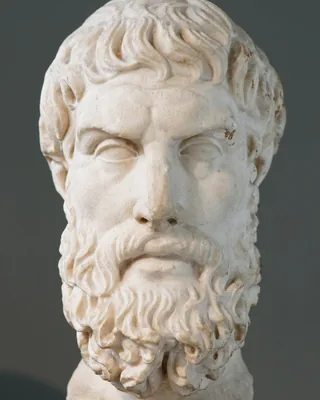
Later depiction · Image credit
Who they are
Epicurus developed an atomist account of nature in which innumerable worlds could exist. His Letter to Herodotus argues from infinite atoms and space rather than observations of distant planets. The surviving text gives this timeline an early philosophical discussion of worlds beyond our own, with ancient terminology that differs from modern astronomy.
He belongs to the history of ideas about a plurality of worlds.
Selected contributions
- Argued that atomist premises allow innumerable worlds, both similar and dissimilar to ours.Source ↗
Selected works
Primary text · Undated ancient text
Letter to Herodotus
Epicurus reasons from atomist premises to innumerable worlds, including worlds unlike our own. This philosophical argument documents ancient possibilities of thought, not observations of exoplanets.
Linked English translation by R. D. Hicks; no exact ancient composition date established in the inspected material.
Reading scope & citation
Reuses documented prior inspection: The relevant translated passage and surrounding argument inspected; no independent dating of the letter was established.
In the timeline
- Late 4th–early 3rd century BCEEpicurus reasons about innumerable worlds
Biography sources & portrait credit
- Letter to Herodotus ↗Lexundria, reproducing the translated ancient text
Portrait credit
Unknown Roman sculptor; photograph by Marie-Lan Nguyen. Public domain (rights-holder dedication). Via Wikimedia Commons.
Later depiction. Cropped to 4:5, resized to 320 × 400 and converted to WebP.
Image source & identification ↗ · Public domain (rights-holder dedication) ↗

